Registration, Welcome Kit & Program Orientation
Registration & Verification
- Arrived at Shri Venkateshwara University, Amroha, and completed onboarding documentation.
- Collected the official welcome kit, internship badge, offer letter, and program materials.
- Interacted with student coordinators and verified profile credentials.
Program Orientation
- Attended the layout orientation outlining program requirements, attendance parameters, and final evaluations.
- Briefed on the discipline, code of conduct, and professional learning expectations.
Key Takeaways & Learnings
Day 0 established the organizational baseline: demonstrating that successful state-level collaborations begin with rigorous operational discipline and clear expectations.
Inauguration & Introduction to Cyber Security
Inauguration & Purpose
- Attended the official inauguration ceremony of APCSIP-2026 with law enforcement and cybersecurity officials.
- Heard introductory expert talks about the purpose of the program and the importance of cybersecurity in today's digital world.
Cybercrime Ecosystem
- Reviewed the structure of the cybercrime threat ecosystem, studying modern attack vectors affecting community targets.
- Examined the coordination workflow between local cyber cells and national incident logs (NCCRP).
Key Takeaways & Learnings
Understood the strategic role of cyber investigators: mapping the security loop from human awareness to system hardening and coordinating case workflows with state agencies.
OSINT Investigation Techniques & Digital Footprinting
Cyber Psychology
- Studied the principles of Cyber Psychology: understanding how scammers, hacktivists, and terrorists exploit human emotions online.
- Analyzed cybercriminal motivations: financial gain, revenge, recognition, power, and ideological agendas.
Open Source Intelligence
- Practiced passive data gathering methods using OSINT platforms to construct digital investigation profiles.
- Explored threat toolsets: Maltego (link analysis), Shodan (IoT search), Google Dorking, Canary Tokens, DeHashed, and FotoForensics.
- Performed a self-audit on my own online presence, identifying leaked data points appearing in past breaches.
Key Takeaways & Learnings
Vulnerabilities often lie in human trust and residual footprints. Mastered methods to query open network registers without exposing investigation endpoints.
Cyber Laws, Research Methodology & Artificial Intelligence
Cyber Laws & Research
- Studied the legal frameworks governing digital space in India, examining cybersecurity regulations under the IT Act.
- Learned core technical research steps: problem statements, literature reviews, data collection pipelines, sampling layouts, and formal reporting standards.
Career Guide & AI
- Participated in a specialized career advisory panel covering professional certifications and roadmaps.
- Discussed the roles of Machine Learning, Deep Learning, and Generative AI models in threat pattern recognition and predictive cybersecurity.
Key Takeaways & Learnings
Developing case files requires a combination of legal frameworks, structured scientific methodology, and predictive technology blocks.
Malware Analysis & Digital Forensics
Android Malware Analysis
- Studied Android malware packaging, studying dynamic Command & Control (C2) server mappings.
- Explored static and dynamic binary auditing concepts within safe sandboxed testing systems.
Digital Forensics
- Analyzed digital forensics pipelines: evidence collections, bit-stream imaging procedures, and preservation guidelines.
- Examined hash verification standards (MD5/SHA-256) used to ensure proof integrity during handling.
Key Takeaways & Learnings
Learned to protect data integrity at every step. Understood how metadata signatures trace back threat agents and keep evidence legally valid.
Security Operations Center (SOC) & Bug Bounty Hunting
Security Operations Center
- Studied the architecture of Security Operations Centers (SOC), event correlation, SIEM, and EDR systems.
- Analyzed system alerts and sorted log records using Wazuh, Elastic, Wireshark, and NXLog logs.
- Investigated IP reputations and malicious payloads via VirusTotal, Hybrid Analysis, and IBM X-Force feeds.
Bug Bounty & Ethical Hacking
- Learned bug bounty techniques: subdomain enumeration, API endpoints testing, and business logic flaws.
- Discussed responsible disclosure policies, vulnerability severity assessment standards, and platforms (HackerOne, Bugcrowd, Intigriti).
Key Takeaways & Learnings
Securing networks requires continuous monitoring. Bug bounties and threat dashboards work together to harden endpoints against attacks.
Cyber Compliance, Regulations & Cyber Resilience
Swipe, Secure, Comply
- Studied the Digital Personal Data Protection (DPDP) Act legal requirements and compliance boundaries.
- Analyzed governance frameworks including RBI, SEBI CSCRF guidelines, SWIFT Customer Security Program details, and incident reporting rules.
- Studied fraud prevention mechanisms, focusing on mule account networks detection indicators, SBOM/CBOM, and supply chain security risks.
Industry Experience
- Guest speakers shared practical industry experiences, career guidance, and continuous skill development pathways.
- Discussed professional growth, industry expectations, and roadmap planning in corporate security fields.
Key Takeaways & Learnings
Compliance standards and early cyber resilience planning protect organizational infrastructure from supply chain attacks.
Blockchain, Cryptocurrency & Real Cyber Crime Investigations
Blockchain & Crypto
- Studied blockchain structure, public/private keys, consensus algorithms, smart contracts, and Web3 security gaps.
- Discussed blockchain-specific threats: private key leaks, smart contract logic bugs, 51% hash attacks, and DNS hijacking risks.
Real Investigations
- Police officers shared real-life cybercrime investigation experiences, digital evidence collection, and legal workflows (Section 91 CrPC).
- Participated in case studies, tracing transaction nodes across public ledgers, and resolving domain queries.
Key Takeaways & Learnings
Blockchain security depends on cryptographic key protection. Learned how investigators trace transaction nodes across public ledgers during case tracking.
Data Privacy & Artificial Intelligence
Data Privacy Law & AI
- Studied the landmark data privacy ruling: K.S. Puttaswamy vs. Union of India, establishing privacy as a fundamental right.
- Explored ethics in emerging tech: responsible artificial intelligence usage and user data protection protocols.
Confidential Session
- Attended a closed, confidential briefing discussing professional responsibility, discretion, trust, and handling sensitive threat intelligence data.
- Learned how cybersecurity professionals work under strict ethical guidelines.
Key Takeaways & Learnings
Cyber security operates under strict ethical guidelines. Integrity, confidentiality, and data safety form the basis of professional investigations.
Offensive Security & Dark Web Investigation
Offensive Security
- Explored offensive security workflows: passive/active reconnaissance, system enumeration, directory brute-forcing, and network scanning.
- Analyzed web security configurations, including cross-origin setups and subdomain exposure paths.
Dark Web & Investigation
- Studied the architecture of Tor networks: clear web vs. deep web vs. dark web, and onion routing mechanisms.
- Analyzed digital footprints across onion nodes using cyber kill chain models.
Key Takeaways & Learnings
To protect systems, security analysts must understand attacker methodologies. Mapping subdomains and open ports helps mitigate exposure risks.
Malware Analysis & Mobile Forensics
Malware Analysis
- Performed malware analysis in isolated VMs (FlareVM/REMnux), parsing network traffic logs.
- Studied trojans, rootkits, and ransomware execution traces using Process Hacker, Wireshark, TCPView, and PEStudio.
Mobile Forensics
- Analyzed mobile data extraction methods: logical, physical, filesystem dumps, JTAG, and hardware chip-off.
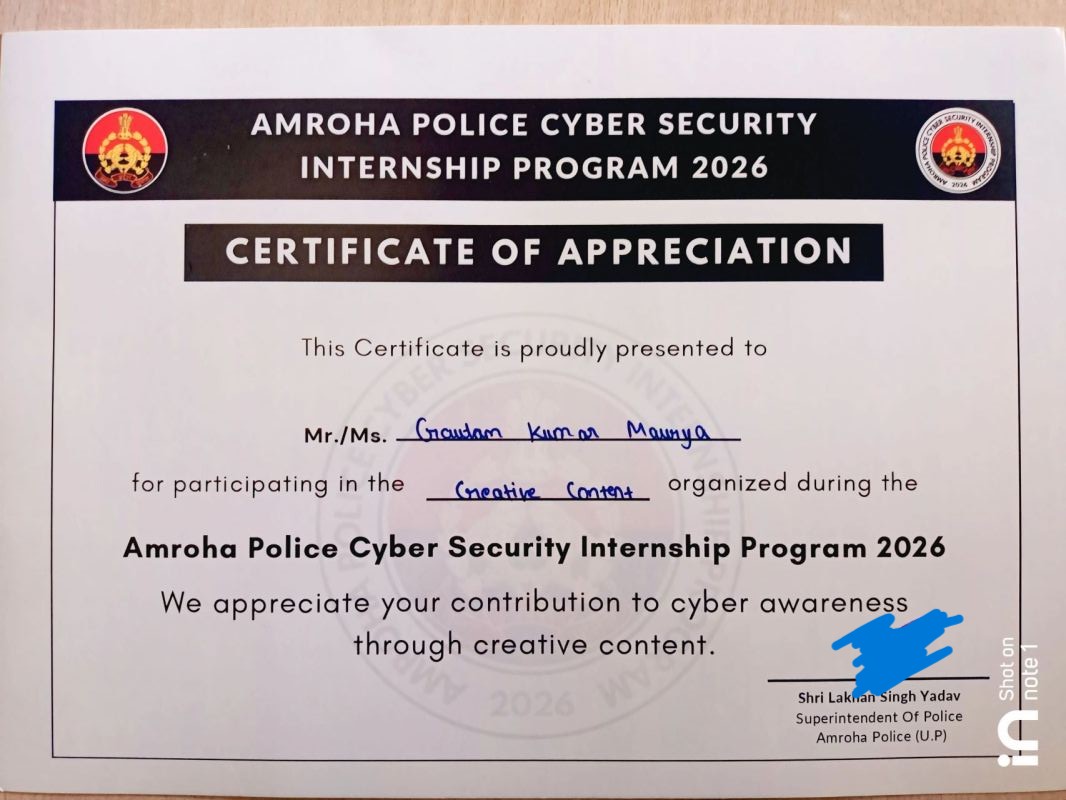
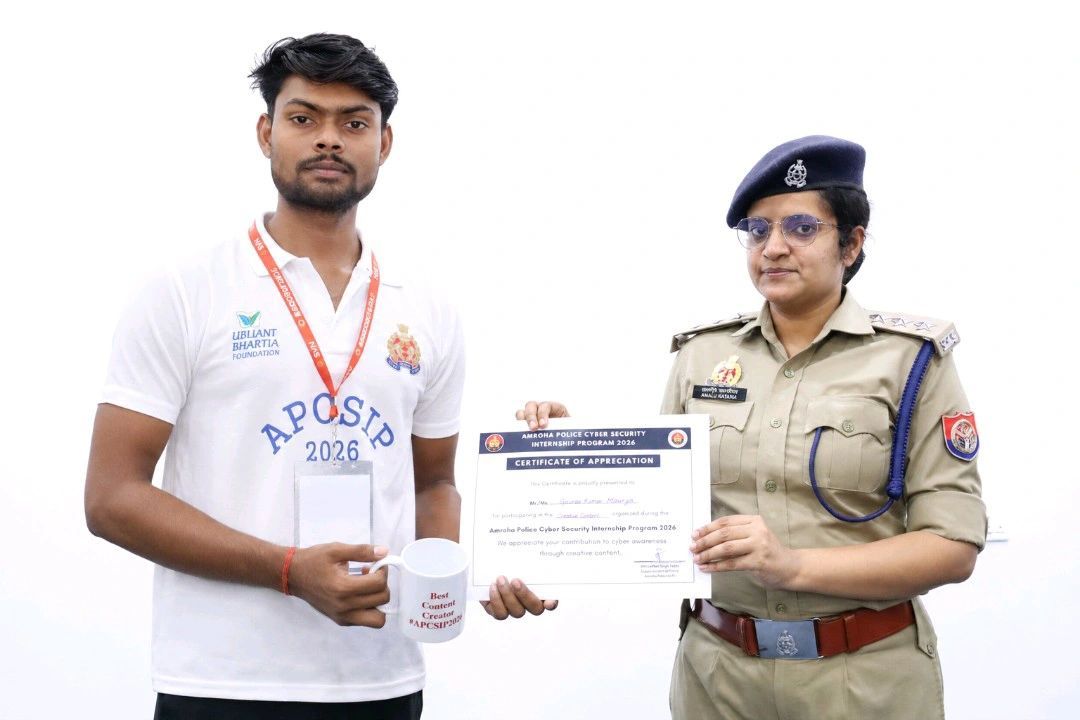
- Earned recognition as the Best Content Creator among all internship participants.
Key Takeaways & Learnings
Forensic processes must maintain strict data integrity. Advanced chip extraction recovers critical evidence from locked or damaged devices.
Mobile Forensics, Cyber Hygiene & Ethics
Mobile Forensics
- Studied mobile device acquisition standards, maintaining strict chain of custody protocols.
- Reviewed mobile data acquisition, digital evidence preservation, and data integrity verification methods.
Hygiene & Ethics
- Reviewed cyber hygiene best practices: strong password creation, multi-factor authentication setup, and digital safety loops.
- Participated in interactive group exercises for International Yoga Day, emphasizing mental focus and physical discipline.
Key Takeaways & Learnings
Technical execution requires ethical responsibility. Maintaining mental focus and discipline improves decision-making in high-pressure forensic environments.
Valedictory Session & Internship Conclusion
Evaluation & Presentations
- Presented my weekly findings and technical reports to the Cyber Crime Cell valedictory board.
- Discussed secure software design pipelines and open database setups with senior officers.
Valedictory & Distribution
- Received the official internship certificate recognizing successful completion of APCSIP-2026.
- Participated in final networking reviews, peer group discussions, and captured group photographs with mentors and coordinators.
Key Takeaways & Learnings
Successfully concluded the program. Gained strong capabilities in OSINT recon, malware processes, and location mapping tracking frameworks.